Why We Built a Natural Swimming Pool – and What We’ve Learned Along the Way
When we first started thinking about having a swimming pool at home, a conventional blue swimming pool was never really what we had in mind.
We wanted somewhere we could properly swim, somewhere the children could enjoy, but also something that felt completely at home in the garden. We didn’t want chlorine, bright blue water and a large expanse of paving. We wanted water, plants, wildlife and a pool that would change with the seasons. That was what led us to natural swimming pools. And, eventually, to building one ourselves.
What is a natural swimming pool?
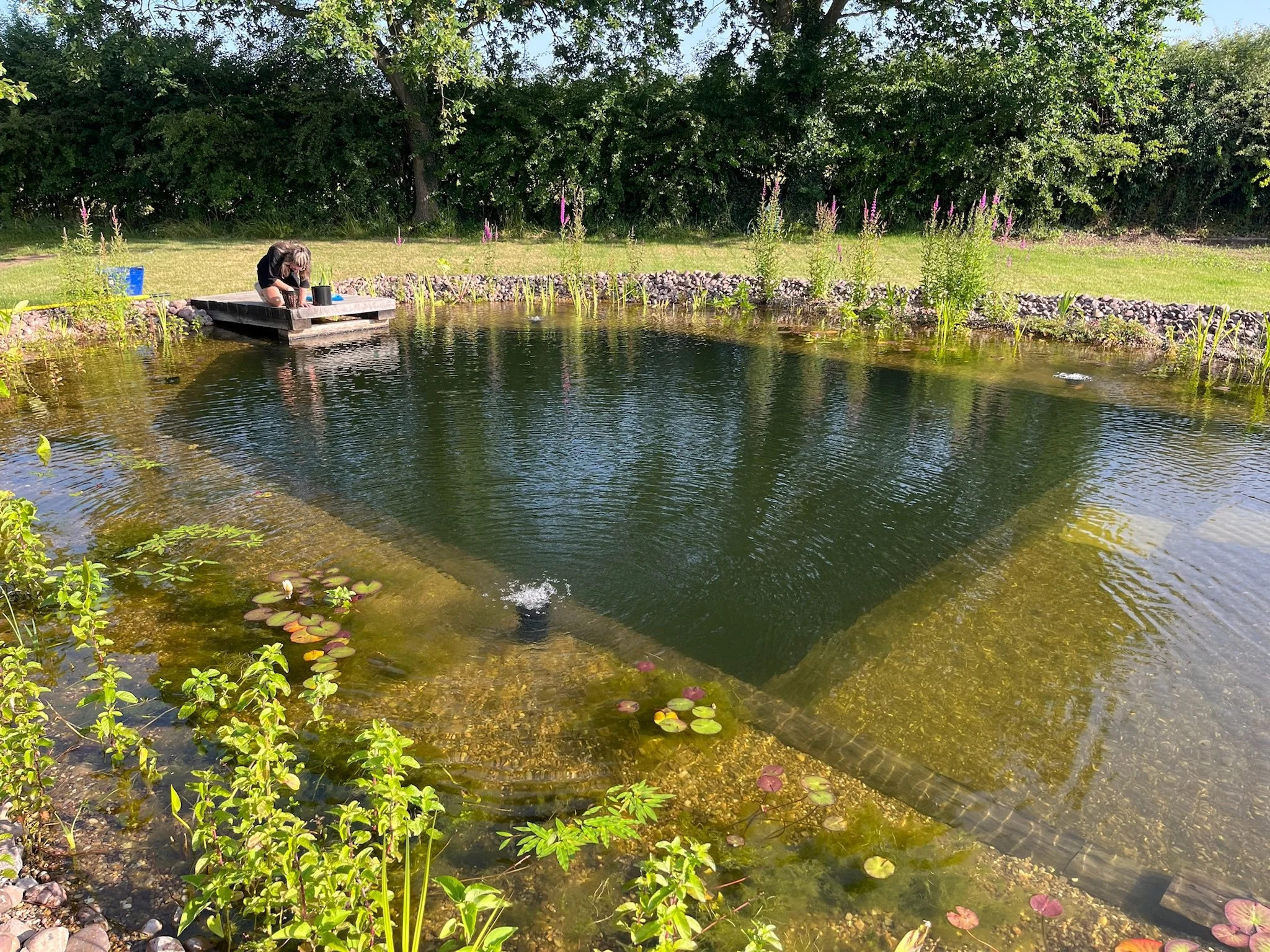
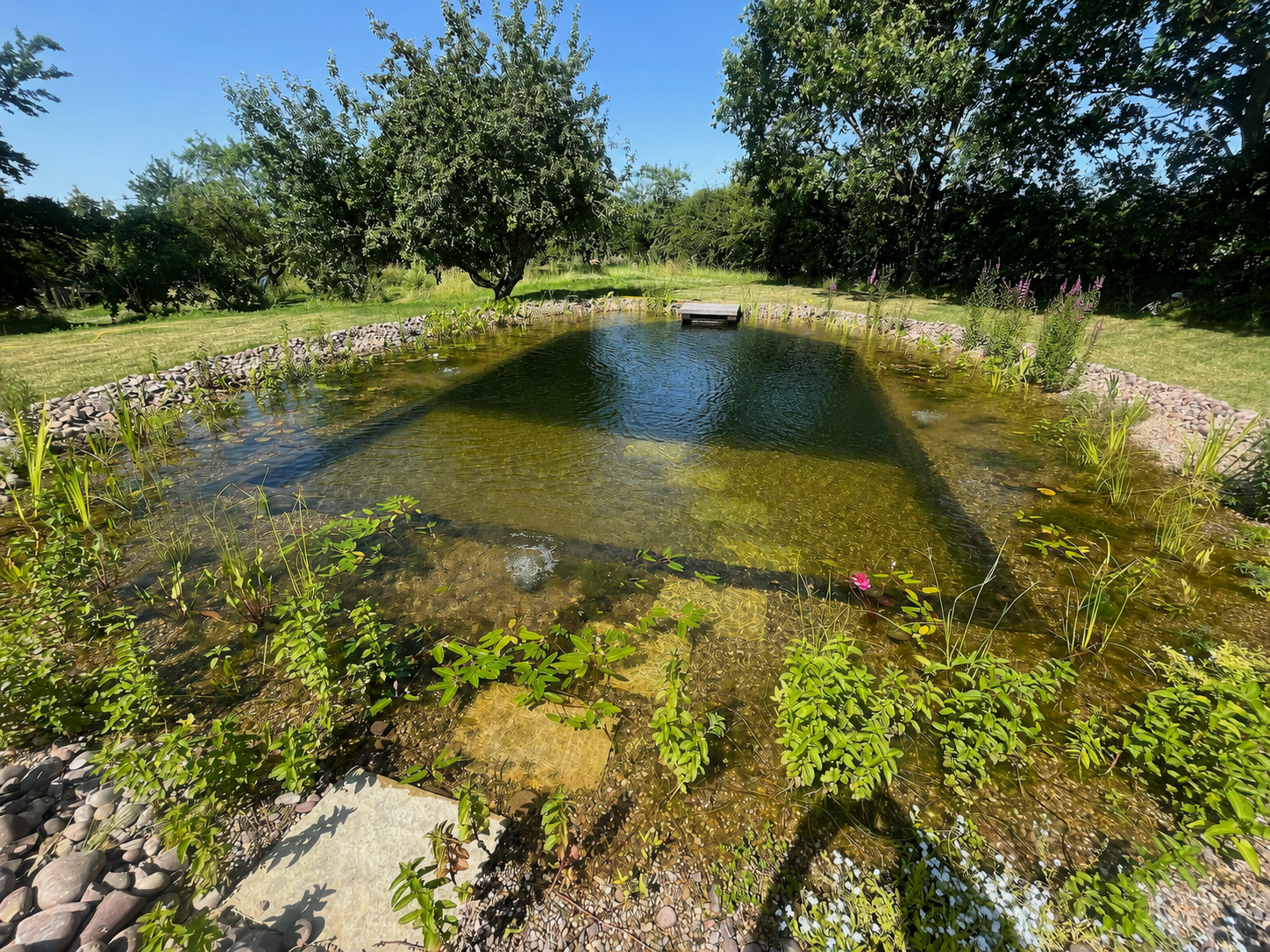
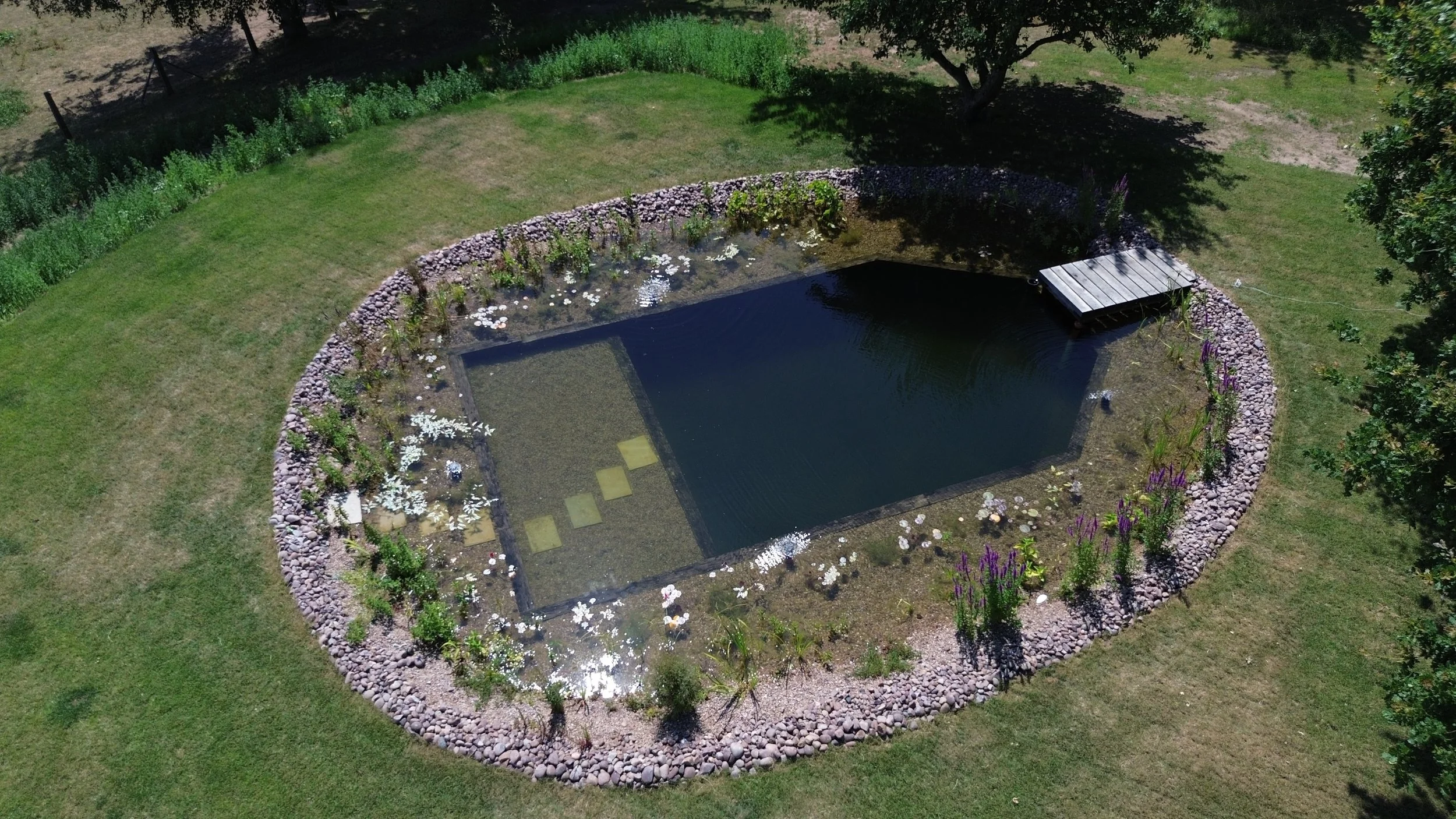
A natural swimming pool – sometimes called a swimming pond – combines a dedicated area for swimming with planted and biological filtration areas that help keep the water healthy naturally.
Rather than relying on chlorine and other traditional swimming pool chemicals, our approach uses water circulation, gravel filtration, aquatic plants and carefully designed biological processes.
The result is something that sits somewhere between a swimming pool and a pond. You still have a proper area of deep, open water to swim in, but around it are marginal plants, gravel beds and wildlife habitat. For us, that combination was exactly the appeal.
Ours started as a slightly ambitious garden project
Our own natural pool is fairly substantial. The overall pond is around 16 metres by 10 metres, with a swimming area approximately 10 metres long by 6 metres wide and water reaching around 2.2 metres deep. It certainly wasn't the smallest project we could have chosen to experiment with. But building our own pool gave us an opportunity that has subsequently become incredibly valuable: we get to live with a natural swimming pool every single day.
We see what happens after weeks of sunshine.
We see what happens after torrential rain.
We see how the planting changes through the year, how the water responds to temperature, how algae behaves, what maintenance is actually required and which parts of the original design we would change if we were building it again.
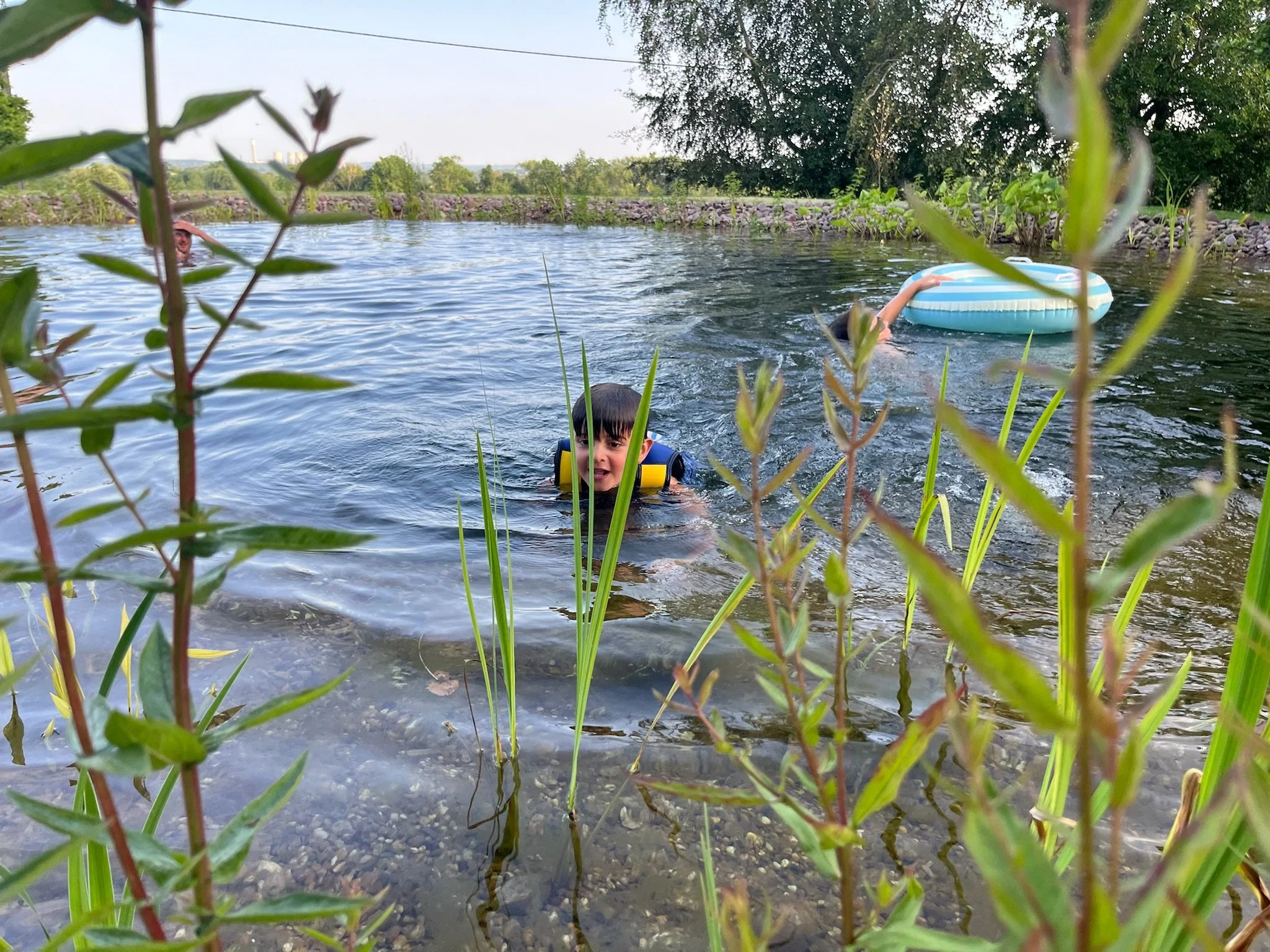
And we swim in it. A lot.
There is quite a difference between understanding how a natural pool should work on paper and standing beside one on a warm summer evening trying to work out why something has changed. That experience now feeds directly into the pools we design and build for our customers.
The wildlife arrived remarkably quickly
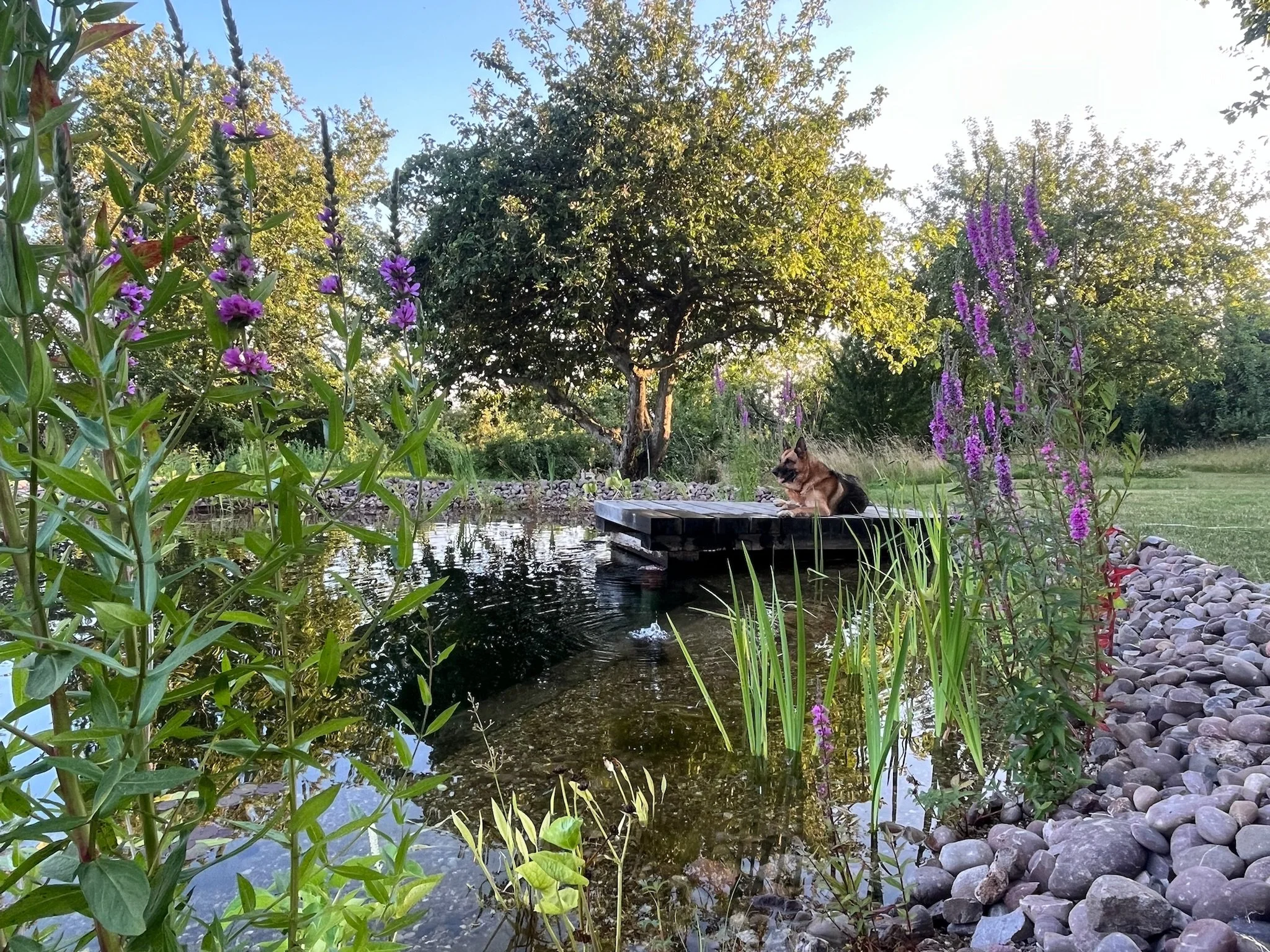
One of the things we hadn't fully appreciated beforehand was just how quickly the pool would become part of the wider garden ecosystem. Newts appeared. Then came water boatmen, diving beetles, pond skaters, snails and dragonflies. Birds regularly visit the edges to drink and bathe, and we've watched everything from wagtails and goldfinches to swallows using the pool and surrounding planting. You very quickly stop thinking of it simply as a swimming pool. It becomes a habitat.
That does occasionally create slightly unusual swimming-pool dilemmas. Cleaning the pool, for example, becomes a very different proposition when you're checking the bottom of the net for tiny newts before you empty it. But that's part of what we love about it. We didn't want to build a sterile body of water in the middle of the garden. We wanted something alive.
Natural doesn't mean maintenance-free
This is probably one of the most important things we've learned. A natural swimming pool isn't a swimming pool that you build and then simply leave to nature. It is a managed ecosystem. There is still maintenance involved. Plants need managing. Leaves and organic matter need removing. Sediment gradually builds up. Water chemistry matters. Algae can appear, particularly while a pool is establishing itself or when nutrient levels rise.
We've spent a lot of time looking particularly closely at phosphorus. Phosphate is effectively a nutrient for algae, so controlling the amount entering a natural pool can make an enormous difference to how the water behaves. Our local mains water contains considerably more phosphate than we ideally want entering the pool, which has led us down something of a rabbit hole experimenting with different filter media, flow rates and filtration arrangements. It might not be the most glamorous part of natural pool ownership, but it has been incredibly useful. We've learned far more from actually dealing with these challenges than we ever could simply reading about them.
And no, the water isn't always perfectly identical
Natural pool water changes. After heavy rain it may look slightly different. During very warm periods biological activity increases. Pollen blows in. Leaves fall. Plants grow. That doesn't mean the pool isn't working. One of the biggest mindset changes when moving away from a conventional swimming pool is accepting that you are swimming in living water rather than chemically controlled water. Personally, we think that's part of the attraction.
On a sunny morning when the water is completely still, dragonflies are moving between the plants and the regeneration zone is full of life, it is difficult to imagine replacing it with a conventional swimming pool.
What would we do differently?
Quite a few things. And we're actually pleased about that. Building our own pool first has allowed us to refine the way we now approach customer projects. We've made changes to water circulation. We've experimented with different approaches to phosphate removal. We've adapted our skimmer. We've learned more about how organic material moves around the pool and where it naturally accumulates.
We've also developed our preferred construction method, with a defined swimming zone surrounded by planted regeneration areas, allowing us to combine a clean, practical swimming space with the softer appearance of a pond. Every season seems to teach us something new. That continual learning is now a big part of Mount Pleasant Natural Pools.
Would we build one again?
Absolutely. There are easier ways to have a swimming pool. A conventional pool is more predictable. You can control the water with chemicals, vacuum it, cover it and keep it looking broadly the same throughout the year. But that wasn't what we wanted. We wanted to step out of the house and swim surrounded by planting. We wanted frogs, newts and dragonflies. We wanted something that looked just as good from the kitchen window in January as it did when we were swimming in it in July. And we wanted the water itself to feel natural. For us, that's what makes a natural swimming pool special. It isn't just somewhere to swim. It's another part of the garden.
At Mount Pleasant Natural Pools, we design and build bespoke natural swimming pools and swimming ponds across the Midlands and surrounding areas. Our pools combine dedicated swimming areas with planted natural filtration, creating beautiful spaces for both people and wildlife.
If you're considering a natural swimming pool and would like to talk through what might work in your garden, we're always happy to have an informal chat.